
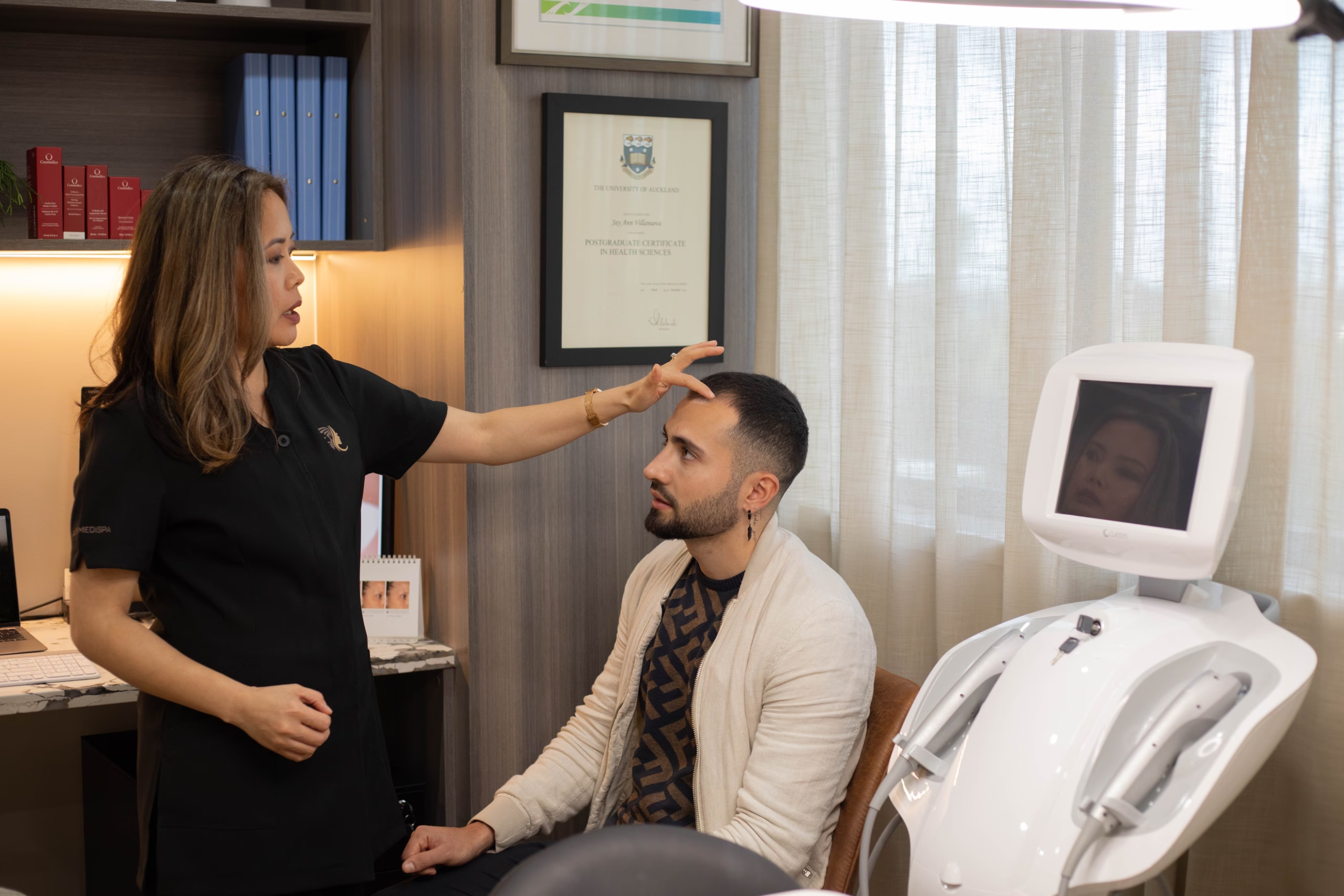
HAIR RESTORATION | BIRKENHEAD, AUCKLAND
Hair loss in men is more treatable than most think.
Most men notice it quietly for months before doing anything about it. By the time they come in, they’ve usually tried products that didn’t work and assumed nothing would. The reality is different. Understanding what’s actually driving your hair loss is the first step, and it changes what’s possible.
CALL 09 418 0743
REGISTERED NURSES
3,000+ PRP TREATMENTS
BIRKENHEAD, AUCKLAND
ANDROGENETIC ALOPECIA
RECEEDING HAIRLINE
THINNING CROWN
TELOGEN EFFLUVIUM
POST-TRANSPLANT MAINTENANCE
SCALP INFLAMATION
SESSION TIME
30 to 40 min
In and out. Most clients come in during a lunch break
INITAL COURSE
None
Mild scalp redness possible. Normal activities same day
MAINTENANCE
3 to 4 sessions
Spaced 4 to 6 weeks apart. Results visible from 3 months
DOWNTIME
Every 3 to 6 months
To sustain results once the initial course is complete
UNDERSTANDING HAIR LOSS IN MEN
Most men have the same two or three causes
Hair loss in men is rarely just one thing. Before recommending any treatment, we assess what’s actually driving it. That means looking at DHT sensitivity, nutrition, stress history, sleep, hormones, inflammation, and family pattern, because the same level of hair loss in two different men can have completely different causes and respond very differently to treatment.
Products that didn’t work for you probably weren’t wrong, they were just treating the surface. Clinical treatment works at follicle level. That’s why the assessment matters.
Androgenetic alopecia
The most common type. Caused by genetic sensitivity to DHT, which binds to follicle receptors and progressively miniaturises them over time. Typically presents as a receding hairline at the temples and thinning at the crown.
Receding hairline, often at temples first
Thinning at the crown progressing inward
Family history on either side
Clinical treatment works best when follicles are still active
Telogen Effluvium
A temporary but often significant shed caused by a physical or psychological trigger, illness, surgery, major stress, or a nutritional deficit. Follicles shift prematurely into the resting phase, resulting in diffuse shedding across the scalp two to four months after the trigger.
Diffuse thinning across the whole scalp
Onset typically 2 to 4 months after a trigger event
Often reversible once the underlying cause is addressed
Can be combined with androgenetic alopecia
Nutritional and Hormonal
Deficiencies in ferritin, vitamin D3, zinc, B12, and folate are among the most commonly missed causes of hair loss in men. Thyroid imbalance and cortisol dysregulation can also disrupt the follicle growth cycle independent of DHT sensitivity.
Diffuse thinning without a clear family pattern
Fatigue, poor sleep, or history of restricted diet
Thyroid symptoms alongside hair changes
Often overlooked, blood testing is required to confirm
Scalp Inflammation
Chronic scalp inflammation disrupts the follicle environment and can accelerate pattern loss. Often presents alongside seborrheic dermatitis, psoriasis, or persistent scalp sensitivity. Addressing inflammation alongside treatment significantly improves outcomes.
Scalp itching, flaking, or persistent irritation
Redness or tenderness on the scalp
Hair loss concentrated in inflamed areas
Often co-occurs with androgenetic alopecia
Alopecia Areata
An autoimmune condition where the immune system attacks hair follicles, causing patchy hair loss. Can affect any area of the scalp. PRP has emerging evidence supporting its use for alopecia areata, though results vary significantly between individuals.
Distinct circular or oval bald patches
Sudden onset, sometimes after a period of stress
Can affect beard, eyebrows, or body hair
Requires clinical assessment before treatment
Not sure what type you have?
Most men come in without knowing what’s causing their hair loss. That’s what the consultation is for. We assess the pattern, discuss your history, and work out what’s actually going on before recommending anything.
30-minute clinical assessment
Scalp and follicle examination
Honest view of your options and what’s realistic
No obligation to proceed
THE SIX PILLARS OF HAIR HEALTH
Why we look beyond the hair loss itself
Hair loss in men rarely has a single cause. These are the six areas we assess in every consultation before recommending a treatment plan.
Nutrient Deficiency
Low ferritin is the most commonly missed cause of hair loss in men. Vitamin D3, zinc, B12, and folate all affect follicle strength and the growth cycle.
Ferritin below 70 micrograms per litre affects hair growth
Zinc deficiency accelerates DHT activity
B12 and folate support cell division in follicles
Inflammation
Scalp inflammation disrupts the follicle environment and accelerates pattern loss. Often presents as dandruff, itching, or scalp sensitivity that most men dismiss.
Scalp conditions like seborrheic dermatitis significantly worsen pattern hair loss
Scalp inflammation shortens the active hair growth phase
Addressing inflammation improves treatment response
Mental Wellbeing
Sustained stress raises cortisol, which disrupts the hair growth cycle and can trigger telogen effluvium. The relationship between stress and hair loss in men is often underestimated.
Telogen effluvium typically presents 2 to 4 months after a stress event
High cortisol reduces follicle sensitivity to growth signals
Sleep deprivation has a compounding effect on hair health
Overall Health
Sleep quality, smoking, cardiovascular health, and medications all affect hair growth. Some common medications, including blood pressure treatments, can contribute to shedding.
Smoking reduces blood flow to the scalp and follicle oxygen supply
Poor cardiovascular health affects blood flow to the scalp
Certain medications including statins and beta-blockers affect hair
Hormonal Health
DHT is the primary hormonal driver of androgenetic alopecia in men. Testosterone converts to DHT via the 5-alpha reductase enzyme. Genetic sensitivity determines how aggressively follicles respond.
Greater sensitivity to DHT causes follicles to progressively shrink over time
Thyroid imbalance disrupts the hair growth cycle
Elevated insulin levels can increase DHT activity in the scalp
Genetics
Genetic predisposition determines DHT sensitivity and the pattern of loss. It does not determine the outcome; early intervention can significantly slow progression and support regrowth.
Inherited from either parent, not just the maternal line
Does not mean treatment won’t work, it means the sooner the better
Genetic hair loss responds best to treatment in the earlier stages
CLIENT RESULTS
What treatment can achieve
Results vary between individuals and depend on the cause and stage of hair loss, consistency of treatment, and the underlying factors involved. These are real client results.
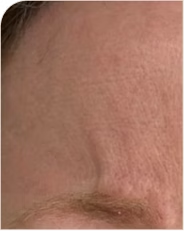
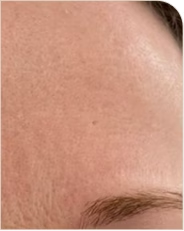
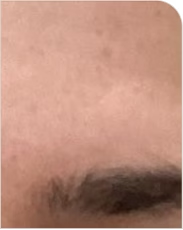
PRP + MICRONEEDLING
4 sessions over 16 weeks. Androgenetic alopecia, crown thinning. Visible density improvement and reduced shedding.
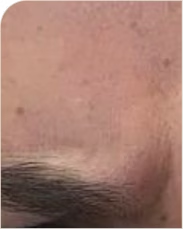
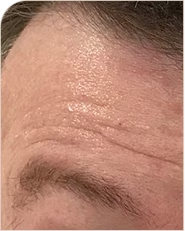
EXO-GROW COURSE OF 3
3 sessions over 12 weeks. Receding hairline and diffuse thinning. Improved hairline density and reduced shedding.
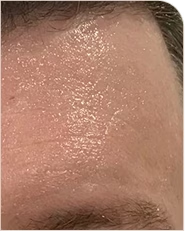
PRP + HAIR VITALITY BOOSTER
5 sessions over 20 weeks. Combined androgenetic and telogen effluvium. Significant reduction in shedding and improved overall density.
Individual results may vary. Outcomes depend on the type, cause, and stage of hair loss, treatment consistency, and individual response. These are real client results and are not a guarantee of outcome.
HAIR LOSS TREATMENTS
Our treatments
PRP HAIR LOSS TREATMENT
Your body’s own growth factors working for you.
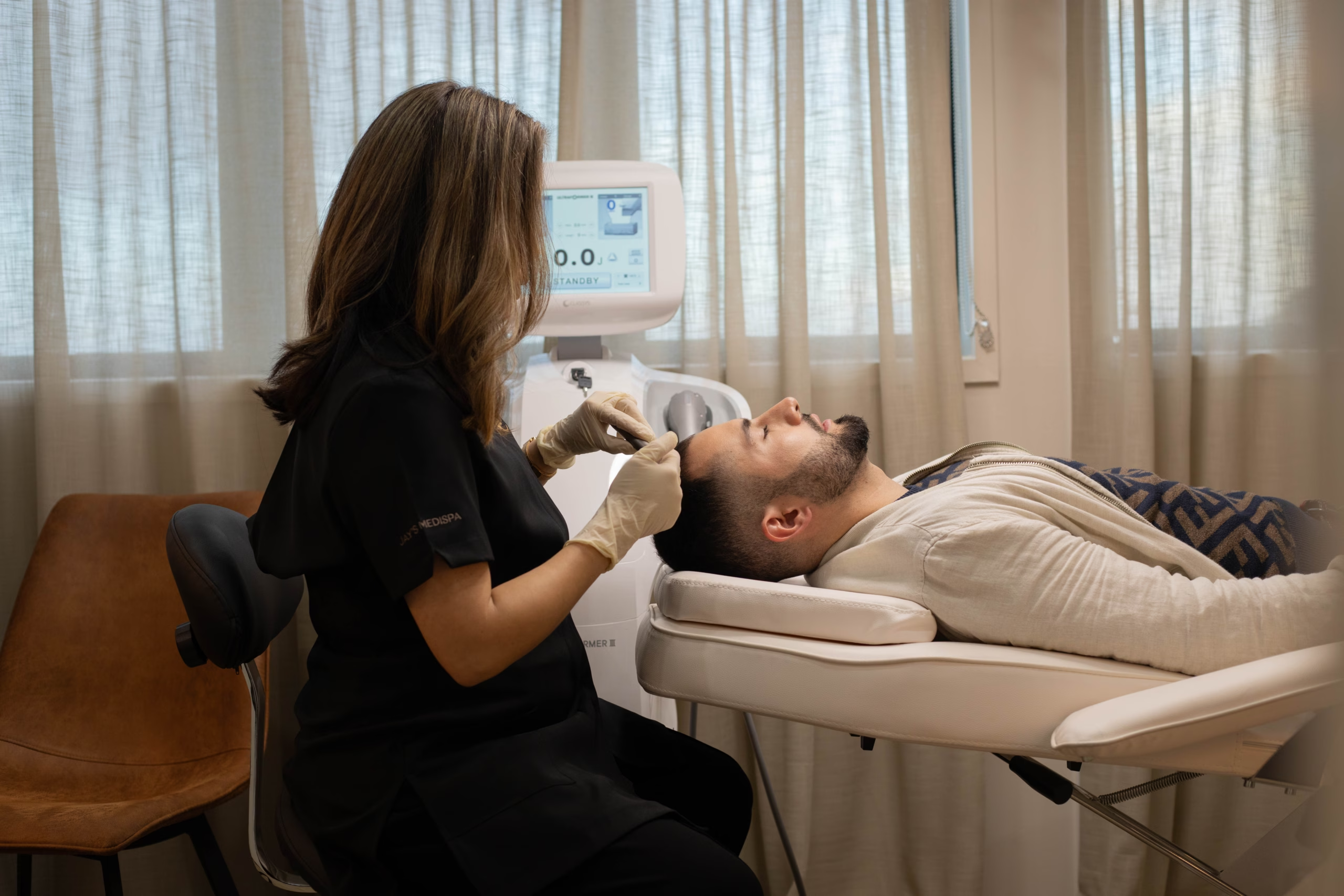
PRP (platelet-rich plasma) takes a small sample of your own blood, concentrates the platelets and growth factors in a centrifuge, and injects that concentrate into the areas of thinning on your scalp. There are no foreign substances involved. It’s your own biology used to support follicle health and encourage natural regrowth.
Clinical evidence supports PRP for androgenetic alopecia and telogen effluvium in men. Results build gradually, most clients notice reduced shedding within two to three sessions and visible density improvement between three and six months.
SESSION TIME
30 to 45 min
INTIAL COURSE
3 to 4 sessions
TIME OFF WORK
None required
MAINTENANCE
Every 3 to 6 months
CHOOSE YOUR TIER
BASIC
PRP Injections
INCLUDES
Two vials drawn and centrifuged
Injected across scalp at 1cm intervals
Supports follicle activity
BETTER
PRP + Microneedling
INCLUDES EVERYTHING IN BASIC, PLUS
Microneedling across target areas
Enhanced growth factor uptake
Collagen and circulation boost
BEST
PRP + Microneedling + Hair Vitality Booster
INCLUDES EVERYTHING IN BETTER, PLUS
Hair Vitality Booster by Innoaesthetics
DHT blockers for hormonal hair loss
Gender-specific formulation
ESPECIALLY EFFECTIVE FOR
Androgenetic alopecia, early to mid-stage
Telogen effluvium and stress-related shedding
Post-transplant maintenance
Nutritional or hormonal hair thinning
EXO-GROW EXOSOME THERAPY
Concentrated growth signals at follicle level.
Exo-Grow by DP Dermaceuticals delivers exosome technology via Dermapen microneedling. Exosomes are cell-derived vesicles that carry concentrated growth factors, peptides, and signalling proteins. They work at a cellular level to support follicle repair and regeneration, more concentrated than PRP for some types of hair loss in men.
Every session includes the Innoaesthetics Hair Vitality Booster Serum, with DHT-blocking actives specifically formulated for hormone-related and genetic hair loss. The male-specific formulation is particularly relevant for androgenetic alopecia.
SESSION TIME
Approx 45 min
INTIAL COURSE
5 to 6 sessions
TIME OFF WORK
None required
MAINTENANCE
Every 6 months
Exosomes deliver growth factors and peptides more concentrated than PRP alone
DHT-blocking actives in the Hair Vitality Booster target hormonal hair loss in men
Male-specific formulation addresses the androgenetic alopecia mechanism directly
No blood draw required, a practical option for men who prefer it
Available as a single session or a course of three with a saving
OUR APPROACH TO FILLERS
Androgenetic alopecia with DHT-driven follicle loss
Scalp inflammation alongside pattern hair loss
Men wanting a no-blood-draw alternative to PRP
Hormonal or genetically driven hair loss
Not sure where to start?
Come in and talk to us. We’ll work out what’s actually driving your hair loss and whether treatment is a realistic option for your situation. No pressure. Just an honest clinical view.
CALL 09 418 0743
COMMON QUESTIONS
What men ask before booking
Anything not covered here, come in and ask us directly.
The most common cause is androgenetic alopecia, driven by DHT sensitivity. But telogen effluvium from stress or illness, nutritional deficiencies, scalp inflammation, and thyroid imbalance all play a role. Understanding the specific cause changes what treatment is appropriate, which is why we assess before recommending anything.
PRP has clinical evidence for androgenetic alopecia in men. It works best when follicles are still active, in the earlier and mid stages of loss. If follicles have been dormant for a long time, results are less predictable. We’ll be direct with you about what’s realistic at your consultation based on your specific pattern and stage.
No. Most men come in during a lunch break. You may have mild scalp redness or sensitivity for a few hours. We recommend avoiding heavy gym sessions for 24 hours but you can return to normal activities on the same day.
Most men notice reduced shedding after two to three sessions. Visible density improvement typically develops between three and six months. Hair regrowth is gradual, results don’t appear overnight, and anyone who tells you otherwise is overselling it.
PRP uses your own blood’s growth factors, drawn and processed on the day. Exo-Grow uses exosome technology with a concentrated blend of growth factors and the Innoaesthetics Hair Vitality Booster, which includes DHT-blocking actives specifically relevant for men with androgenetic alopecia. Exo-Grow also doesn’t require a blood draw. Which one suits you depends on your hair loss type and stage, assessed at consultation.
These treatments support follicle activity but don’t permanently stop the underlying cause of hair loss. Maintenance sessions every three to six months are typically recommended to sustain results. We’ll be straight with you about what’s realistic at your consultation based on your specific situation.
Most over-the-counter products work on the surface. PRP and Exo-Grow work at follicle level using your body’s own biology. That said, results depend on what’s actually causing your hair loss. Some causes respond well to treatment. Others need to be addressed alongside it. That’s why we start with a proper clinical assessment rather than just booking you in.