
DERMAMELAN FACE | BIRKENHEAD, AUCKLAND
Persistent pigmentation. Addresssed at the source.
If you’ve tried creams, facials, or lighter peels and the pigmentation keeps coming back, you’re not alone. Many cosmetic approaches focus on the surface. Melasma, hormonal pigmentation, and post-inflammatory hyperpigmentation involve cellular activity in melanocytes, the cells that produce pigment. Dermamelan by Mesoestetic is a cosmetic depigmentation protocol designed to address that underlying activity rather than only fading what’s visible.
CALL 09 418 0743
REGISTERED NURSES
MESOESTETIC CERTIFIED
PROFESSIONAL CARE
TREATMENT TYPE
Single procedure
Plus 4 months of structured home-care and follow-up
DOWNTIME
5 to 10 days
Redness, peeling, and dryness while the skin renews
OUTCOMES VISIBLE
From 2 to 4 weeks
Continue to improve over 3 to 6 months with homecare
SUITABLE FOR
All skin tones
Clinically effective across all tones, confirmed at consultation
HOW DERMAMELAN WORKS
Most treatments fade pigmentation. Dermamelan regulates it.
Pigmentation forms when melanocytes, the cells responsible for producing skin pigment, become overactive. In conditions like melasma and post-inflammatory hyperpigmentation, this overactivity persists even after the visible pigment is removed, which is why surface-level approaches tend to produce temporary outcomes.
Dermamelan takes a different approach. Its active formulation inhibits the enzyme tyrosinase, which drives melanin production, regulating the activity of overactive melanocytes rather than just targeting existing pigment. This approach is designed to address both current visible pigmentation and the underlying activity that drives recurrence.
The protocol begins with a pre-treatment phase using a structured retinol-based product to prepare the skin. The Dermamelan mask is then applied in clinic. This is followed by four months of structured home-care. This is not optional. The home-care phase is where a significant portion of the correction takes place and is essential to the final outcome.
What Dermamelan treats
Melasma
Hormonal pigmentation that often persists with other approaches. Dermamelan is commonly used for this presentation.
Chloasma
Pigmentation that develops during pregnancy and often persists afterward. Dermamelan can be considered after pregnancy and lactation, with suitability confirmed at consultation.
Post-inflammatory hyperpigmentation
Dark marks that can remain after skin inflammation, acne, or trauma to the skin.
Solar lentigines
Sunspots and other UV-triggered pigmentation on the face and body.
Irregular skin tone and stubborn dark patches
Irregular skin tone and stubborn dark patches. Persistent uneven tone where lighter approaches haven’t produced lasting outcomes.
Developed by Mesoestetic Pharma Group, A professional-use depigmentation formulation used in clinics across more than 90 countries, manufactured under ISO 9001, 13485, and 22716 quality standards. Dermamelan is administered by registered healthcare professionals under clinical supervision.
TWO PROTOCOLS
One concern, two pathways.
Pigmentation presents differently in every person. Whether the right approach is intensive or maintenance is confirmed at consultation. Outcomes vary with adherence to home-care and sun protection.
CLINICAL PROTOCOL
Dermamelan
For persistent, hormonal, or long-standing pigmentation
BEST FOR
Persistent or hormonal pigmentation, melasma presentations, and long-standing discolouration
DEPTH
Works deeper within the skin to regulate overactive melanocyte activity
OUTCOMES
Visible correction over the home-care phase, with initial changes within a few weeks
DOWNTIME
Mild to moderate peeling and redness for 5 to 10 days
AFTERCARE
Dedicated 4-month home-care protocol and strict sun protection. Both are non-negotiable
ONLY ADMINISTERED BY
Registered healthcare professional under clinical supervision
COSMETIC PROTOCOL
Cosmelan
For mild to moderate pigmentation or ongoing maintenance
BEST FOR
Mild to moderate pigmentation, early melasma, uneven skin tone, or maintaining previous results
DEPTH
Gently renews the skin surface and helps regulate melanin activity at a lighter intensity
OUTCOMES
Gradual improvement with a smoother, more even complexion over time
DOWNTIME
Minimal redness or flaking for a few days
AFTERCARE
Simple home-care maintenance and daily SPF
COMMONLY ADMINISTERED BY
Beauty therapist in cosmetic settings
CLIENT RESULTS
What Dermamelan can achieve
Results vary between individuals depending on the type and severity of pigmentation, adherence to home-care, and sun protection. These are real client results.
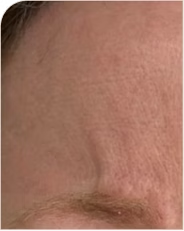
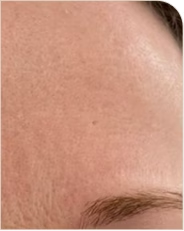
MELASMA
Severe hormonal melasma across the cheeks and upper lip. Significant reduction in pigmentation intensity and improved overall skin clarity after the full Dermamelan protocol.
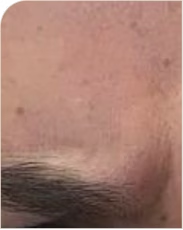

POST-INFLAMMATORY HYPERPIGMENTATION
Widespread post-inflammatory pigmentation following acne. Even reduction across the face with improved skin tone and clarity over the four-month treatment period.
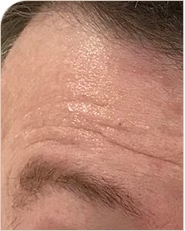
RESISTANT PIGMENTATION
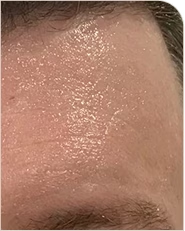
Long-standing uneven pigmentation that had not responded to previous treatments. Measurable reduction in pigmentation intensity and significantly brighter skin overall.
Individual results may vary. Outcomes depend on the type, cause, and stage of hair loss, treatment consistency, and individual response. These are real client results and are not a guarantee of outcome.
PRICING
What’s included
Dermamelan is a full treatment protocol, not a single session. The price covers everything required from consultation to four months of structured home-care. This is what the treatment outcome depends on the process as a whole, not just the in-clinic procedure.
Dermamelan
$2,400
Full protocol, clinical-tier
INCLUDES:
Consultation and skin assessment
Pre-treatment peel and structured preparation products
In-clinic Dermamelan procedure
4 months of prescribed home-care products and protocol
Ongoing support throughout the home-care phase
Includes 1 complimentary LED session 2 months post-treatment
Cosmelan
$1,750
Cosmetic-tier
INCLUDES:
Consultation and skin assessment
Pre-treatment peel and prescribed preparation products
In-clinic Cosmelan procedure
4 months of prescribed home-care products and protocol
Includes 1 complimentary LED session 2 months post-treatment
Available by special request. Discuss with your nurse at consultation.
NOT SURE WHICH PROTOCOL?
Not sure whether Dermamelan or Cosmelan is right for your skin? A consultation is the right place to start. We’ll assess your pigmentation type and severity and tell you honestly which approach is most likely to work.
A NOTE ON PRICING
The $2,400 and $1,750 prices cover the full protocol from start to finish, including all home-care products. There are no additional costs for the home-care products or follow-up support during the four-month phase.
AFTERCARE
The home-care phase is part of the protocol
Dermamelan is a protocol, not a single procedure. What happens after the in-clinic procedure directly determines your outcome. Your full home-care kit is provided at the time of the in-clinic procedure, and we support you throughout the four-month phase.
Use your structured home-care exactly as directed
Apply Dermamelan home-care products strictly as instructed. The protocol is specific. Do not substitute or adjust without speaking to us first.
SPF 50+ is non-negotiable
Avoid direct sun exposure for at least four weeks. Apply SPF 50+ every day, regardless of cloud cover. Sun exposure is the primary cause of pigmentation recurrence.
No exfoliants or active unless approved
Avoid exfoliating products and active ingredients that weren’t part of your approved protocol. These can disrupt the skin’s renewal process.
Keep your skin hydrated
Drink plenty of water and maintain a gentle skincare routine. The skin is working hard during this phase and needs support.
Contact us if anything concerns you
If you experience prolonged irritation or anything unexpected, call us on 09 418 0743. We’re with you throughout the entire protocol.
WHAT TO EXPECT AFTER YOUR PROCEDURE
Redness, peeling, and dryness for five to ten days is a normal and expected part of how Dermamelan works. This is the skin renewing. It is not a complication and should not be mistaken for an adverse reaction.
The skin will feel sensitive and look quite different during this period. Plan for it and avoid social commitments where possible in the first week, and do not apply makeup until redness and sensitivity have settled.
Improvement continues throughout the four-month home-care phase. Significant change typically develops between weeks four and twelve. The LED session two months after the in-clinic procedure supports the skin’s recovery and helps consolidate outcomes.
EXPECTED SIDE EFFECTS
Redness and flushing
Peeling and dryness
Mild swelling
Temporary skin sensitivity
Tightness or discomfort during peeling phase
CLINICAL EVIDENCE
The science behind Dermamelan
Dermamelan is supported by published peer-reviewed research demonstrating its effectiveness for melasma and resistant pigmentation. These studies are among those that inform how we use it in clinical practice.
Further clinical evidence available on request. Results reported in studies may not reflect individual outcomes. Individual results vary.
PUBLISHED STUDY
Non-hydroquinone depigmenting formulation for melasma
Dermamelan formulation | Facial melasma
This study assessed the Dermamelan formulation applied once daily over three months. 10 women with melasma, Fitzpatrick types II to IV, took part. Researchers measured Melasma Area and Severity Index scores and reported an improvement of around 50 percent across the group, with mild irritation the only adverse event noted.
As reported in this study, the Dermamelan formulation demonstrated activity in melasma severity outcomes in a small open-label group. Individual outcomes vary.
Tsilika K, Levy JL, Kang HY, et al. Journal of Drugs in Dermatology, 2011. PMID: 22052305
PUBLISHED STUDY
Topical depigmenting actives in a chemical peel for melasma
Azelaic, resorcinol and phytic acid peel | Facial melasma
This split-face study compared a peel combining azelaic acid, resorcinol and phytic acid against 50 percent glycolic acid. 42 women with melasma were treated every two weeks across six sessions, with a three-month follow-up. Both sides showed improvement on Melasma Area and Severity Index scores, and the triple-active combination was reported as comparable to glycolic acid with fewer complications.
As reported in this study, the triple-active peel demonstrated activity in melasma severity outcomes, comparable to glycolic acid. This study examines these actives, not Dermamelan as a named product. Individual outcomes vary.
PUBLISHED STUDY
Systematic review and meta-analysis of azelaic acid for melasma
6 pooled trials | Azelaic acid versus hydroquinone
This systematic review and meta-analysis pooled data from six randomised controlled trials, with 673 patients in total, comparing azelaic acid against hydroquinone for melasma. The researchers reported that azelaic acid showed a lower mean change in Melasma Area and Severity Index than hydroquinone, and noted that larger, longer-term studies are still needed.
As reported in this analysis, azelaic acid demonstrated activity in melasma severity outcomes, with a lower mean change than hydroquinone across the pooled trials. This analysis examines azelaic acid as an active, not Dermamelan as a named product. Individual outcomes vary.
Albzea W, AlRashidi R, Alkandari D, et al. Cureus, 2023. PMID: 37457606
Pre-treatment requirements: A consultation and clinical assessment by one of our Registered Nurses is mandatory before Dermamelan can be booked. A structured pre-treatment regimen is required for several weeks before the in-clinic procedure, to prepare the skin and reduce downtime. The procedure cannot proceed without this preparation phase.
Sun protection: Dermamelan outcomes are directly dependent on strict sun protection during and after the protocol. Pigmentation recurrence is more likely in clients who do not follow sun protection guidelines consistently. SPF 50+ must be applied daily throughout the home-care phase and beyond.
Home-care compliance: The four-month home-care phase is not optional. It is an integral part of the Dermamelan protocol, and a meaningful portion of the correction takes place during this period. Clients who do not complete the home-care phase may see reduced outcomes.
Downtime expectations: Redness, peeling and dryness for five to ten days following the in-clinic procedure are expected and normal, and should be planned for. Clients should not schedule important social or professional commitments in the week following the procedure.
Suitability: Dermamelan is not suitable for everyone. Suitability is assessed at consultation based on your pigmentation type, skin condition, medical history, and ability to adhere to the protocol requirements.

Pigmentation that hasn’t responded before may need a different approach.
If you’ve been dealing with melasma or stubborn pigmentation for a long time, come in and talk to us. We’ll assess what’s driving it and tell you whether Dermamelan is the right approach for your skin.
CALL 09 418 0743
COMMON QUESTIONS
Frequently asked questions
Anything not answered here, come in and ask us directly.
Dermamelan is a clinical-tier depigmentation protocol by Mesoestetic. It works by regulating the activity of the melanocytes, the cells responsible for producing pigment. Where surface peels and creams act mainly on pigment already visible in the skin, Dermamelan is formulated to address the melanin production process that drives pigmentation. Individual outcomes vary and are discussed at consultation.
Dermamelan is used to address a range of pigmentation concerns, including melasma, post-inflammatory hyperpigmentation (dark marks left by acne or skin trauma), solar lentigines (sun spots), and uneven or irregular skin tone. Whether it is suitable for your pigmentation is assessed at consultation.
Mild to moderate redness, peeling, and dryness for five to ten days following treatment is normal and expected. This is the skin actively renewing. Plan for it and avoid important social commitments in the first week. Strict sun protection is required throughout the treatment and home-care phase.
The home-care phase is four months of structured products and protocol that begins after the in-clinic procedure. It is not optional. It is where a meaningful portion of the correction takes place. Your full home-care kit is provided at the time of the procedure and we support you throughout. Clients who do not complete the home-care phase may see reduced outcomes.
Laser treatments work by targeting and breaking down existing pigment. For some types of pigmentation, particularly melasma, laser can carry a risk of rebound or worsening, because the heat can trigger an inflammatory response that stimulates further melanin production. Dermamelan instead works by regulating melanocyte activity, which is why it is often used for hormonal and inflammatory pigmentation. Which approach is right depends on your pigmentation type, and that is assessed at consultation.
Reference: McKesey J, Tovar-Garza A, Pandya AG. Melasma Treatment: An Evidence-Based Review. American Journal of Clinical Dermatology, 2020. PMID: 31802394 Link: https://pubmed.ncbi.nlm.nih.gov/31802394/
Dermamelan is designed to be suitable across a wide range of skin tones, including deeper tones, where some depigmentation approaches carry a higher risk of causing further pigmentation change. It is not suitable for everyone, though. Suitability is confirmed at consultation, where your skin is assessed before any protocol is recommended.
Dermamelan pricing at Jay’s Medispa in Birkenhead, Auckland, is $2,400. This covers the full protocol: consultation, pre-treatment peel and structured preparation products, the in-clinic Dermamelan procedure, and four months of structured home-care. A complimentary LED session is included two months after the procedure. The price covers everything listed above, with no additional cost for the home-care products.